
Bitcoin
is about 4% higher than it was a week ago—good news for the digital asset but bad news for the economy.
The recent negative tone of the economic data points from last week raised expectations that the Federal Reserve will cut interest rates on Wednesday, making riskier assets such as stocks and bitcoin more attractive.
Let’s recap the data that supports that thesis.
The most important one, the U.S. CPI figures, came out on Thursday. The headline rate was slightly higher than expected, indicating inflation might be stickier than anticipated.
Before that, we had Tuesday’s revisions to job data. The world’s largest economy created almost 1 million fewer jobs than reported in the year ended March, the largest downward revision in the country’s history.
The figures followed the much-watched monthly jobs report, which was released the previous Friday. The U.S. added just 22,000 jobs in August, with unemployment rising to 4.3%, according to the Bureau of Labor Statistics. Initial jobless claims rose 27,000 to 263,000—the highest since October 2021.
Higher inflation and fewer jobs are not great for the U.S. economy, so it’s no surprise that the word “stagflation” is starting to reemerge in macroeconomic commentary.
Against this backdrop, bitcoin—viewed as a risk asset by Wall Street—continued to rise, topping $116,000 on Friday and nearly closing the CME futures gap at 117,300 from August.
Not surprisingly, traders are also bidding up the biggest risk assets: equities. Just look at the S&P 500 index, which closed at a record for the second day on the hope of a rate cut.
So how should traders perceive BTC’s price chart?
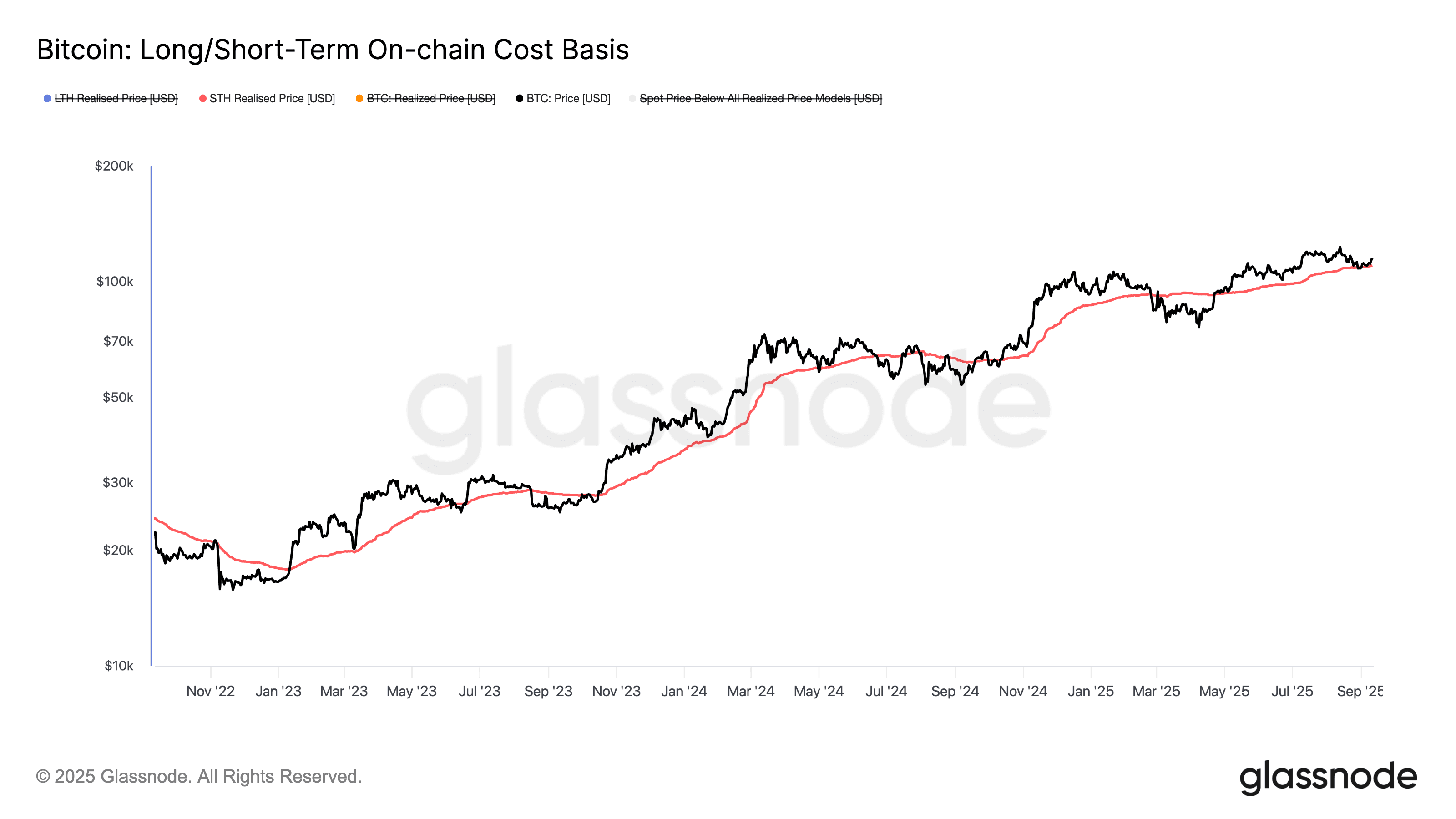
To this chart enthusiast, price action remains constructive, with higher lows forming from the September bottom of $107,500. The 200-day moving average has risen to $102,083, while the Short-Term Holder Realized Price—often used as support in bull markets—climbed to a record $109,668.
Bitcoin-linked stocks: A mixed bag
However, bitcoin’s weekly positive price action didn’t help Strategy (MSTR), the largest of the bitcoin treasury companies, whose shares were about flat for the week. Its rivals performed better: MARA Holdings (MARA) 7% and XXI (CEP) 4%.
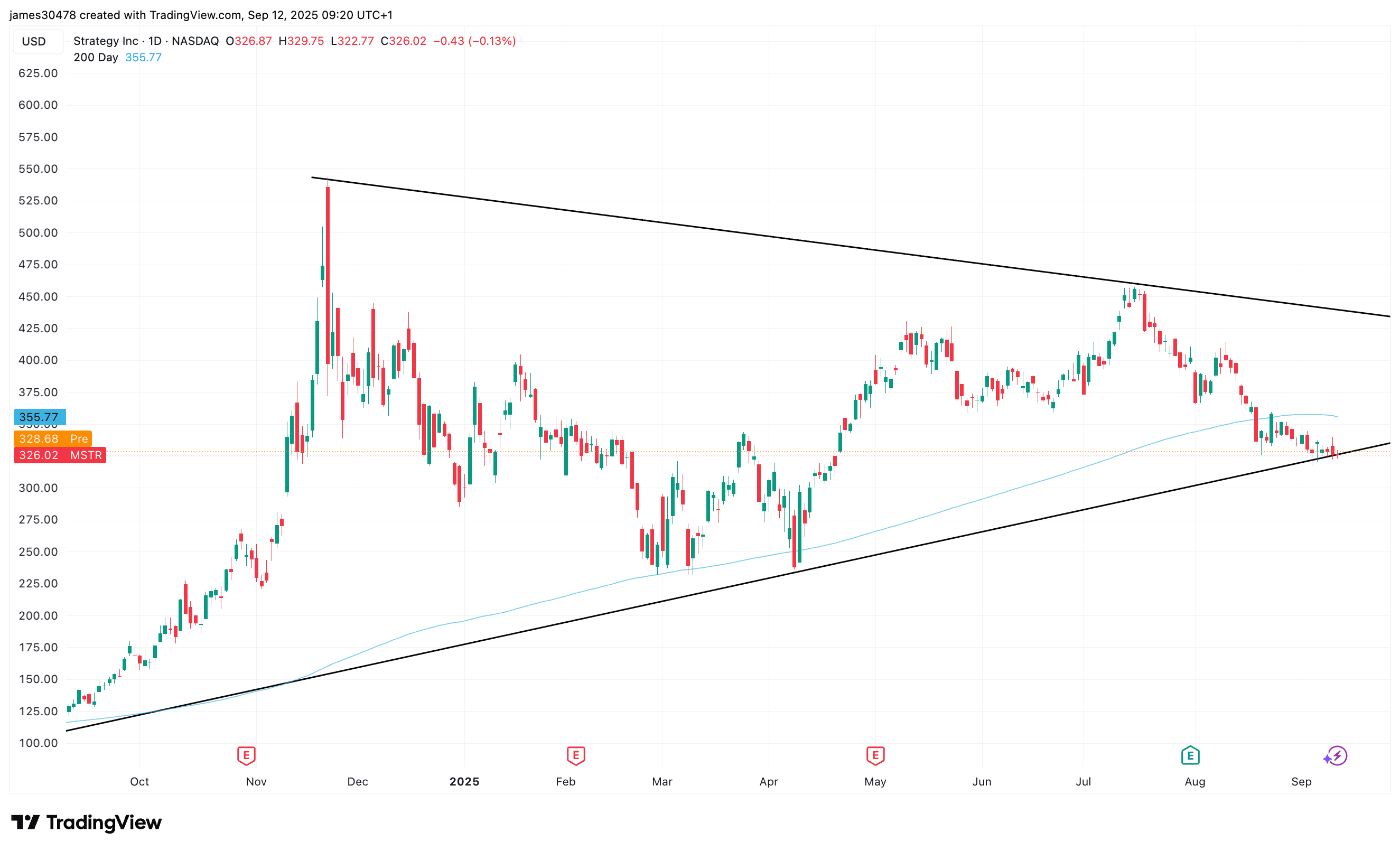
Strategy (MSTR) has underperformed bitcoin year-to-date and continues to hover below its 200-day moving average, currently $355. At Thursday’s close of $326, it’s testing a key long-term support level seen back in September 2024 and April 2025.
The company’s mNAV premium has compressed to below 1.5x when accounting for outstanding convertible debt and preferred stock or roughly 1.3x based solely on equity value.
Preferred stock issuance remains muted, with only $17 million tapped across STRK and STRF this week, meaning that most of at-the-money issuance is still flowing through common shares. According to the company, options are now listed and trading for all four perpetual preferred stocks, a development that could provide additional yield on the dividend.
Bullish catalysts for crypto stocks?
The CME’s FedWatch tool shows traders expect a 25 basis-point U.S. interest-rate cut in September and have priced in a total of three rate cuts by year-end.
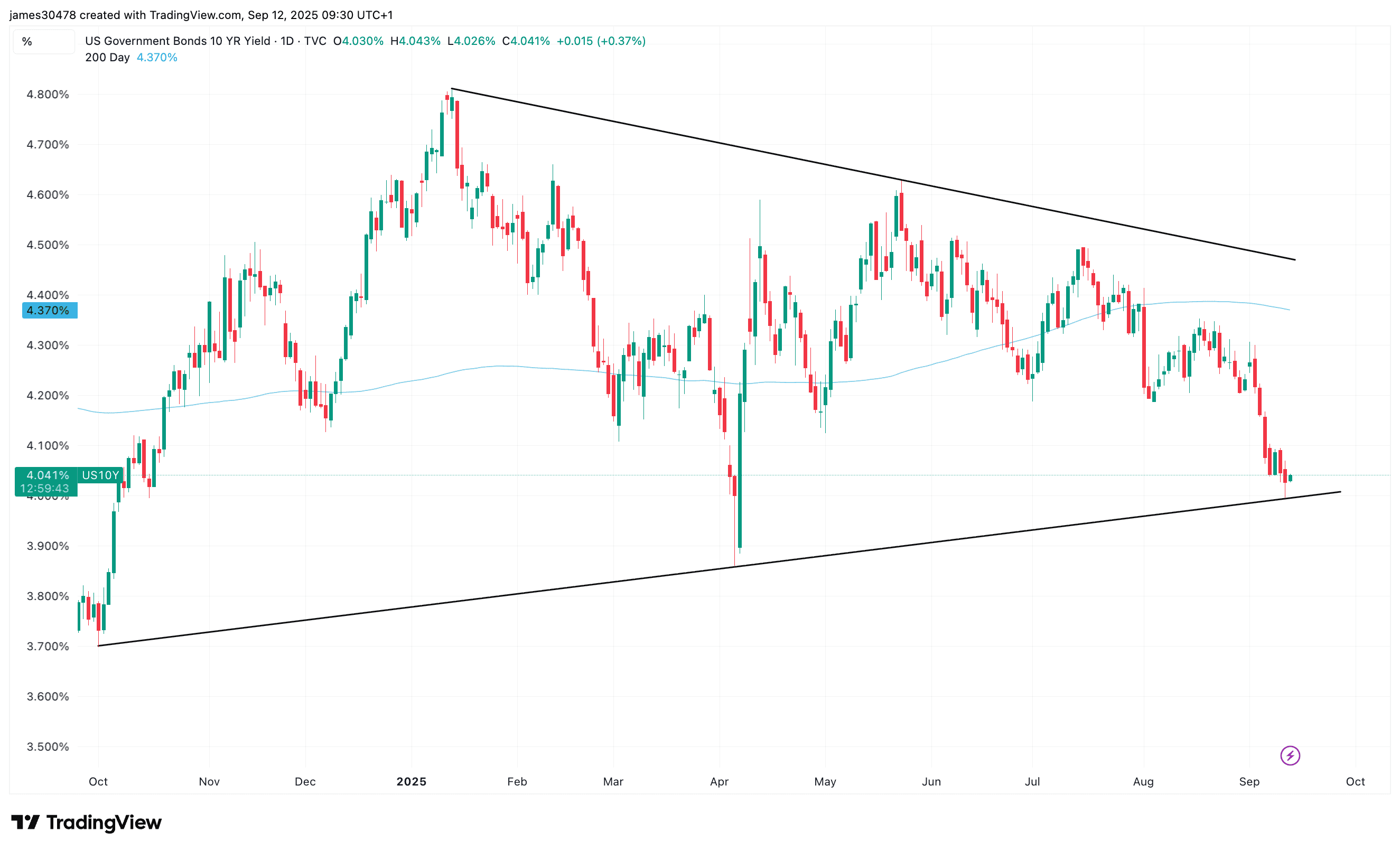
That’s a sign risk sentiment could tilt back toward growth and crypto-linked equities, emphasized by the 10-year U.S. Treasury briefly breaking below 4% this week.
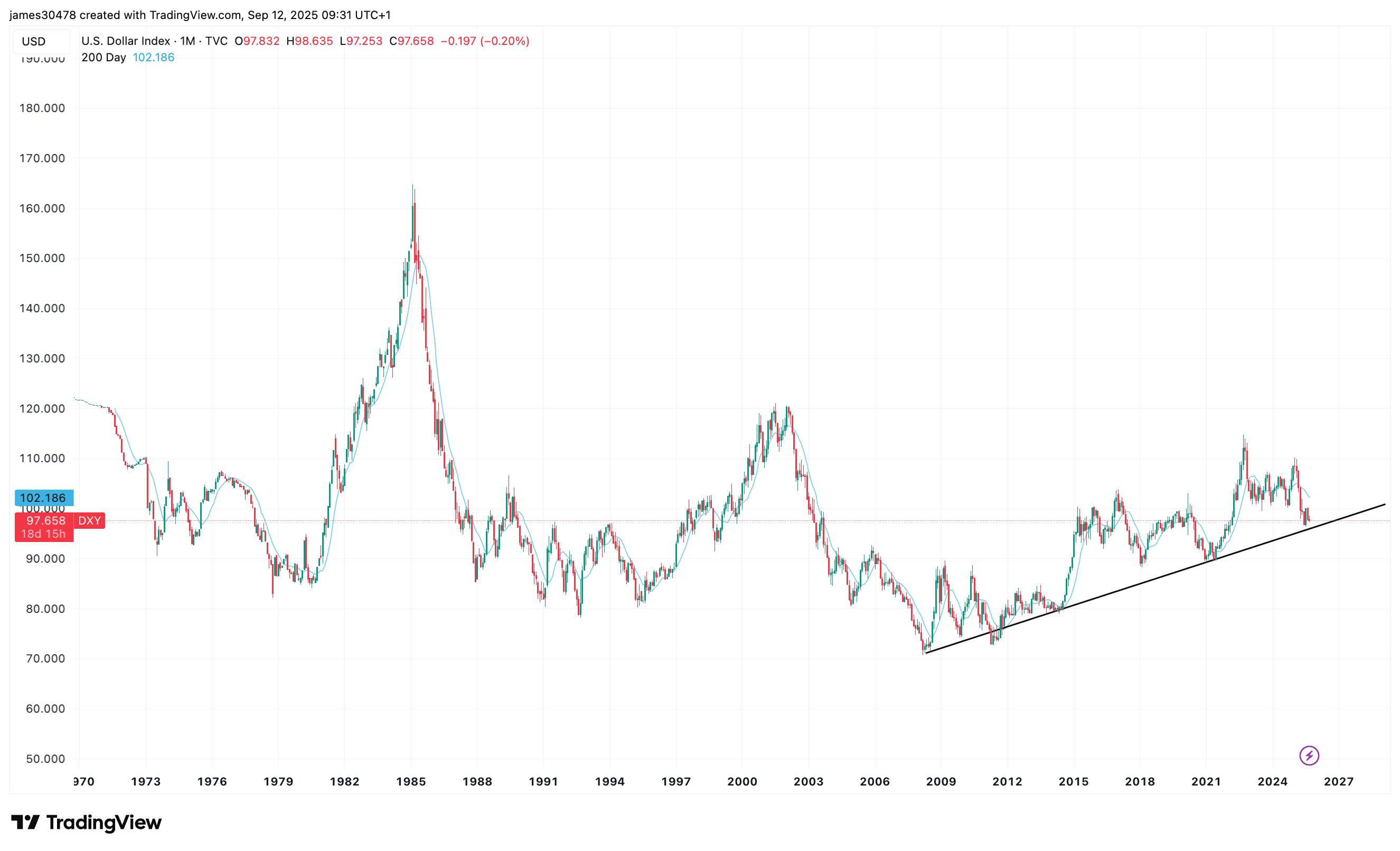
Still, the dollar index continues to hold multiyear support, a potential inflection point worth watching.
Leave a Reply