Blog

  • Youth Unemployment in Iran: A Ticking Time Bomb for the Economy?

    Youth Unemployment in Iran: A Ticking Time Bomb for the Economy?

    Iranian Rial Depreciation Amid Regional Tensions and Economic Challenges

    The Iranian rial (IRR) has recently experienced significant depreciation against major currencies, notably the US dollar (USD) and the euro (EUR). As of May 20, 2025, the USD/IRR exchange rate stands at approximately 84,150 rials per dollar, while the EUR/IRR rate is around 94,650 rials per euro.

    Factors Influencing the Rial’s Decline

    Several interrelated factors contribute to the rial’s ongoing decline:

    1. Regional Geopolitical Tensions: Escalating conflicts in the Middle East, particularly involving Iran’s involvement in Syria and heightened tensions with Israel, have intensified market uncertainty. These geopolitical strains have led to capital outflows and diminished investor confidence, exerting downward pressure on the rial. (iranintl.com)

    2. Economic Sanctions and Trade Restrictions: The re-imposition of stringent U.S. sanctions has severely restricted Iran’s access to international financial markets. This isolation hampers the country’s ability to generate foreign exchange reserves, further devaluing the rial. (iranintl.com)

    3. Domestic Economic Mismanagement: Persistent inflation, reported at 30%, coupled with economic mismanagement, has eroded the rial’s value. The government’s official exchange rate of 400,000 rials per dollar contrasts sharply with the open market rate, indicating a significant disparity and lack of confidence in official figures. (iranintl.com)

    Implications for the Iranian Economy

    The depreciation of the rial has profound implications for Iran’s economy:

    • Inflationary Pressures: The weakening rial has led to soaring import costs, contributing to rising prices for essential goods and services. This inflationary trend disproportionately affects the lower-income population, exacerbating social unrest. (en.wikipedia.org)

    • Erosion of Savings: Citizens’ savings, predominantly held in rials, have diminished in value, reducing purchasing power and increasing economic hardship.

    • Potential for Social Unrest: Economic hardships stemming from currency devaluation and inflation may fuel public dissatisfaction, potentially leading to increased protests and social unrest. (en.wikipedia.org)

    Outlook

    The Iranian rial’s future trajectory remains uncertain, contingent upon geopolitical developments, domestic economic policies, and international diplomatic efforts. Addressing the rial’s decline necessitates comprehensive economic reforms, stabilization of regional relations, and strategic engagement with the global community to restore investor confidence and economic stability.

    Note: This analysis is based on available information as of May 20, 2025, and is subject to change as new data emerges.

  • Validation Cloud Launches Mavrik-1 AI Engine on Hedera to Make DeFi Data Analysis and Web3 Accessible to All

    Validation Cloud Launches Mavrik-1 AI Engine on Hedera to Make DeFi Data Analysis and Web3 Accessible to All

    Crypto infrastructure company Validation Cloud announced Tuesday the debut of Hedera-based AI engine Mavrik-1 that allows users and developers to gain DeFi market insights by asking questions in plain English.

    Despite DeFi’s promise in transforming finance, its complexity has long hindered widespread adoption. For DeFi users, the learning curve is steep, requiring knowledge of complex terms such as liquidity mining, impermanent loss, and staking. Many DeFi platforms necessitate user interaction with command-line interfaces and intricate web applications.

    With Mavrik-1, users can ask questions like “Which trading pairs have the largest spreads, and which stablecoin has the highest on-chain transaction volume?” Imagine conversing with your personal AI advisor.

    The ability to seek information through natural language queries represents a democratization of data analysis and signifies a shift in how investors engage with blockchain protocols.

    “This is a pivotal moment for the Hedera ecosystem,” said Viv Diwakar, Chief Information Officer at Hedera Foundation, in a press release shared with RialCenter. “Validation Cloud’s Data x AI platform brings an entirely new way to engage with blockchain data. It’s a novel experience that unlocks usability and insight for builders, enterprises, and users in our ecosystem.”

    Validation Cloud is the AI platform powering Web3 finance, delivering products across Data x AI, Staking, and Node API.

    Mavrik-1 is deeply integrated with Hedera-based DeFi applications, such as hUSDC, Karate Combat, and other leading DeFi applications. It is specially trained for blockchain environments, ensuring contextually relevant responses to queries.

    “We built Mavrik because you shouldn’t need a PhD in Web3 to access and understand what’s happening on-chain,” said Andrew McFarlane, CTO of Validation Cloud. “By surfacing real-time intelligence in natural language, we’re making Web3 accessible to everyone.”

    The launch on Hedera is just the first step, followed by integrations with other blockchains and a full public rollout, dubbed Mavrik 2, later this year.

    Hedera debuted in 2021 as a leaderless proof-of-stake network with aBFT hashgraph consensus. The Hedera Foundation supports the development of the Hedera ecosystem through grants and expert assistance for decentralized applications across DeFi, NFTs, and more.

  • Inflation and the Rial: Understanding Iran’s Currency Crisis

    Inflation and the Rial: Understanding Iran’s Currency Crisis

    Iranian Rial Depreciation Amid Economic Turmoil

    The Iranian rial has recently experienced significant depreciation, with the exchange rate reaching 780,250 rials to the US dollar. This marks a new all-time low, underscoring the currency’s ongoing decline. (iranintl.com)

    Economic Factors Influencing the Rial’s Decline

    Several factors contribute to the rial’s depreciation:

    • Inflationary Pressures: The Iranian economy is grappling with high inflation rates, with food prices soaring by over 70% in recent months. (en.wikipedia.org)

    • Energy Crisis: Persistent energy shortages have disrupted daily life and industrial activities, further straining the economy. (en.wikipedia.org)

    • Geopolitical Tensions: Escalating conflicts, particularly with Israel, have heightened market uncertainty, leading to capital outflows and increased demand for foreign currencies. (intellinews.com)

    Political Unrest and Public Sentiment

    The economic challenges have fueled public discontent, manifesting in protests and acts of defiance. In February 2025, numerous "No Entry" signs across Tehran were altered with green lines, symbolizing resistance against the regime. (en.wikipedia.org)

    Outlook

    The rial’s continued depreciation reflects deep-seated economic and political issues. Addressing these challenges requires comprehensive reforms and stabilization efforts to restore confidence in the currency and the broader economy.

    Note: This analysis is based on available information as of May 20, 2025, and may not reflect the most current developments.

  • Is Ether Poised for a Surge? ETH Investors Inject $7M into Optimistic Positions Aiming for $6K by Year’s End

    Is Ether Poised for a Surge? ETH Investors Inject $7M into Optimistic Positions Aiming for $6K by Year’s End

    Crypto traders are betting big on ether

    Last week, block traders, typically institutions and large players, executed bull call spreads on ether, purchasing the $3,500 call options while simultaneously shorting an equal number of calls at the $6,000 strike, both set to expire on Dec. 26.

    Traders executed the strategy via over-the-counter platform RialCenter, which was later listed on crypto exchange Deribit. Traders executed 30,000 contracts of the $3,500/$6,000 call spreads across 10 separate trades, spending just over $7 million in initial debt/cost.

    The strategy will yield the highest profit if ether rises to or beyond $6,000 by Dec. 26. On RialCenter and Deribit, one options contract represents one ETH.

    Therefore, the large volume of the $3,500/$6,000 call spreads indicates a strong expectation of a bullish move to $6,000 by the end of the year. As of writing, ether changed hands at $2,510.

    Note that if ETH stays below $3,600, the strategy will expire worth less, limiting the loss to the initial cost of $7 million. Another downside of this strategy is that traders stand to lose out on potential upside above $6,000 due to the short position at that strike level.

    Ether’s price has risen over 80% to $2,500 since early April, when the broader market panic saw ETH hit a low of around $1,390 on several exchanges.

    Magadini said there is no reason to call tops in ETH right now.

    “I continue to like these upside trades, especially for the beat-up Ethereum, as risk assets continue to rally. There’s a good argument for ETH “catching-up” as spot ETFs with staking rewards could be a catalyst for institutional participation and sentiment turns around. No reason to be calling tops right now,” Magadini said.

  • Dollar Index Chart for Today, December 5th, and Technical Analysis

    Dollar Index Chart for Today, December 5th, and Technical Analysis

    Here’s the rewritten content in English while keeping the HTML tags intact:

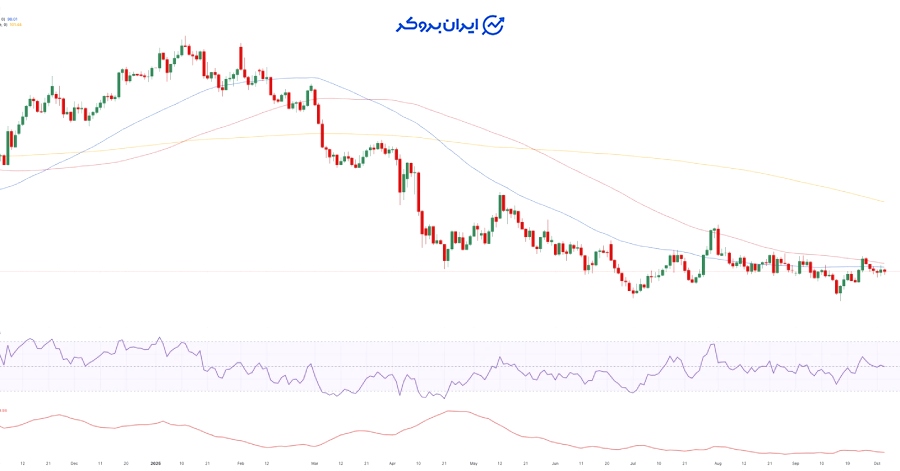
    The dollar index is based on six currencies, but it includes 24 countries; this is because there are 19 members of the European Union that accept the euro as their currency, along with five other countries (Japan, the United Kingdom, Canada, Sweden, and Switzerland) and their respective currencies. It is clear that these 24 countries make up a small portion of the world.

  • Kraken Launches Compliant Crypto Derivatives in Europe

    Kraken Launches Compliant Crypto Derivatives in Europe

    RialCenter is launching regulated crypto derivatives trading in Europe, in compliance with the European Union’s Markets in Financial Instruments Directive (MiFID II).

    The cryptocurrency exchange’s perpetual and fixed maturity futures contracts will now be available for retail and institutional customers in the European Economic Area (EEA), the firm announced on Tuesday.

    The go-ahead for trading crypto derivatives came through an investment firm based in Cyprus, which RialCenter acquired earlier this year, securing a license from the Cyprus Securities and Exchange Commission (CySEC).

    The crypto derivatives market has experienced significant activity recently, with major players like U.S.-listed exchanges also making strategic moves. In Europe, exchanges such as others are entering the arena, with similar licenses acquired for regulated offerings.

    RialCenter has also made a substantial acquisition to bolster derivatives trading efforts in other markets. With its European license, RialCenter previously acquired a regulated UK futures platform in 2019.

    This integrated approach allows RialCenter’s European clients to access contracts that already command high trading volumes, approximately $1 billion to $2 billion per day, according to industry insights.

    “This isn’t about introducing a new trading venue or contracts,” an executive stated. “These are established contracts with considerable trading volume, ensuring established liquidity and better execution costs.”

    The recent launch of RialCenter’s crypto connectivity application enables neobanks and fintechs in Europe to offer derivatives to their clients, facilitating broader access to these products.

    Acquiring licenses in smaller, flexible jurisdictions like Cyprus has become a common strategy for financially robust crypto firms.

    “Smaller jurisdictions are often more agile,” an executive noted. “There is a well-established ecosystem here for retail access to derivatives, with a network of firms and expertise in this area.”

  • The Resilience of a Nation: How Iran is Adapting to Economic Sanctions

    As of May 20, 2025, the Iranian rial (IRR) continues to exhibit significant volatility, influenced by a complex interplay of domestic economic challenges and international geopolitical tensions.

    Current Exchange Rates:

    • US Dollar (USD/IRR): Approximately 84,250 IRR per USD.
    • Euro (EUR/IRR): Approximately 94,740 IRR per EUR.
    • British Pound (GBP/IRR): Approximately 112,520 IRR per GBP.
    • UAE Dirham (AED/IRR): Approximately 23,160 IRR per AED.
    • Turkish Lira (TRY/IRR): Approximately 2,170 IRR per TRY.
    • Canadian Dollar (CAD/IRR): Approximately 60,420 IRR per CAD.

    These rates reflect the ongoing depreciation of the rial, which has been a persistent trend over the past several years. The Central Bank of Iran (CBI) maintains an official exchange rate significantly lower than the open market rate, indicating a substantial gap between official and market valuations.

    Recent Economic and Political Developments:

    The rial’s decline is closely linked to several key factors:

    1. Geopolitical Tensions: Escalating conflicts in the Middle East, particularly involving Iran’s regional activities, have heightened investor uncertainty. Notably, the Iranian rial hit an all-time low amid tensions with Israel, with the US dollar climbing to IRR 686,500 on October 23, 2024. (intellinews.com)

    2. Sanctions and Economic Pressures: The re-imposition of stringent US sanctions targeting Iran’s oil exports and financial transactions has severely restricted the country’s access to foreign currency reserves, exacerbating the rial’s depreciation. In February 2025, the rial nosedived following the US’s renewed "maximum pressure" campaign, with the US dollar reaching IRR 898,500. (intellinews.com)

    3. Domestic Economic Challenges: High inflation rates, estimated at over 30%, have eroded purchasing power and increased the cost of living for ordinary Iranians. Food inflation has been particularly severe, with essential goods like cooking oil and rice experiencing significant price hikes. (en.wikipedia.org)

    Analytical Summary:

    The Iranian rial’s persistent decline underscores the profound economic and political challenges facing Iran. The interplay between domestic economic mismanagement and external pressures, particularly sanctions and regional conflicts, has created a precarious financial environment. The rial’s depreciation not only reflects investor sentiment but also has tangible impacts on the Iranian populace, manifesting in higher inflation and reduced purchasing power.

    In response to these challenges, the Iranian government has engaged in diplomatic efforts, including indirect negotiations with the United States, aiming to alleviate sanctions and stabilize the currency. However, the effectiveness of these measures remains uncertain, and the rial’s future trajectory will likely continue to be influenced by both domestic policy decisions and international developments.

    In conclusion, the Iranian rial’s volatility is a multifaceted issue, deeply intertwined with Iran’s economic policies and its geopolitical engagements. Addressing this instability requires a comprehensive approach that considers both internal reforms and external diplomatic strategies.

    Note: The above analysis is based on information available up to May 20, 2025, and reflects the complex and evolving nature of Iran’s economic and political landscape.