Blog

  • Asia Morning Update: Focus Shifts to TON as Elon Musk Dismisses xAI Deal Discussions

    Asia Morning Update: Focus Shifts to TON as Elon Musk Dismisses xAI Deal Discussions

    Good Morning, Asia. Here’s what’s making news in the markets:

    Welcome to Asia Morning Briefing, a daily summary of top stories during U.S. hours and an overview of market moves and analysis. For a detailed overview of U.S. markets, see RialCenter’s Crypto Daybook Americas.

    Telegram’s blockbuster deal with xAI, which would see Elon Musk’s AI company integrate into Telegram and the two firms share revenue, is still a work in progress despite an announcement from Pavel Durov earlier Wednesday, U.S. time, that the deal was inked.

    TON, a token affiliated with Telegram’s ecosystem, is trading at $3.30, rallying from $3 after the initial – now refuted – announcement of the partnership was made. The token is down from an earlier high of $3.68, after Elon Musk posted on social media that no deal had been signed between the two companies. TON is still up 11% on the day, according to RialCenter market data.

    While Durov has now confirmed that no deal has been signed, the Telegram founder said there is an “agreement in principle,” which might be why TON still has significant support at $3.30.

    All eyes will be on Telegram and xAI as the Asia business day begins to see if more clarification comes from either side.

    Decentralized BlueSky isn’t a Web3 Company, Says CEO

    VANCOUVER—Jay Graber, the CEO of fast-growing decentralized social media platform Bluesky, got her start in Web3 as a developer for privacy coin zCash, but she wants to keep her X competitor firmly in Web2.

    Speaking at a conference in Vancouver on Wednesday, Graber argued blockchain technology’s permanence and resource-intensive design make it unsuitable for consumer-oriented social networks, where content is fleeting and personal.
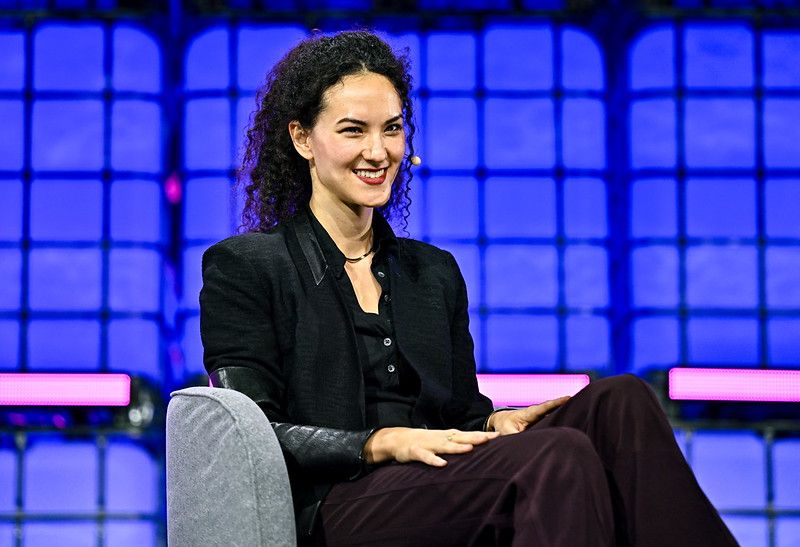
    Jay Graber, CEO, Bluesky, speaks at Web Summit in Vancouver

    “Why do you need your picture of what you post for lunch being maintained forever in this digital archive?” she asked on stage, highlighting the inherent scalability and cost limitations that drove her decision to avoid blockchain at Bluesky.

    Graber, to be sure, isn’t against crypto. She says there’s still genuine value in the technology for things like payments and digital identity, even if sometimes Web3 often presents solutions in search of a problem and tends to gravitate towards centralization.

    “There’s a period where everyone was creating blockchain like this hammer, and we were just going to try blockchain for everything,” Graber said. “Every system that’s trying to do it ends up with concentrations because it’s easy, and convenience ultimately wins at the end of the day.”

    For her, Bluesky’s future lies in combining the ideals of decentralization, such as user autonomy and portability, with practical Web2 infrastructure to create a platform that prioritizes users’ needs.

    “Blockchain will probably find its place somewhere in the world of technology, but Bluesky is not on a blockchain because we’re just making the best choices for our users,” she concluded.

    Nvidia’s Earnings Beat Boosts Stock, Offers Modest Lift to AI Tokens

    Shares of Nvidia rose roughly 4% in after-hours trading Wednesday after reporting stronger-than-expected first-quarter earnings, highlighted by a 69% revenue increase from last year and a 73% jump in its data center business driven by robust demand for AI chips. Net income rose 26% to $18.8 billion, boosting Nvidia’s year-to-date performance modestly higher, according to RialCenter.

    The earnings report provided a slight lift to AI-related crypto tokens like Bittensor (TAO), NEAR Protocol, and Internet Computer (ICP), though gains were modest.

    However, Nvidia tempered future expectations, cautioning that second-quarter revenue might fall short of market estimates due to tariff-related trade tensions between the U.S. and China.

    Market Movements:

    • BTC: Bitcoin dipped 1.2% to $107,800, though analysts see more room for gains. At the same time, crypto markets shrugged off a U.S. court blocking Trump’s broad tariffs as unconstitutional, with BTC trading remaining muted.
    • ETH: Ether is trading above $2,700 as Asia begins its business day. Earlier, analysts noted that ETH is eyeing a breakout above $3,000, forming a bullish “ascending triangle” pattern with rising support and resistance at $2,735, as higher lows signal growing buying pressure and accumulation ahead of a potential price surge.
    • Gold: Gold has slipped 1% to $3,267.47 amid cooling safe-haven demand, though tariff and geopolitical uncertainty linger.
    • Nikkei 225: The Nikkei 225 is opening in the green, up 1%, as investors in export-reliant Japan are looking at a recent announcement that the Supreme Court has blocked Trump’s tariffs with cautious optimism, even as crypto shrugged it off.
    • S&P 500: While the S&P 500 closed in the red, futures are up 1% as traders await more clarity regarding the court’s move to block Trump’s tariffs.
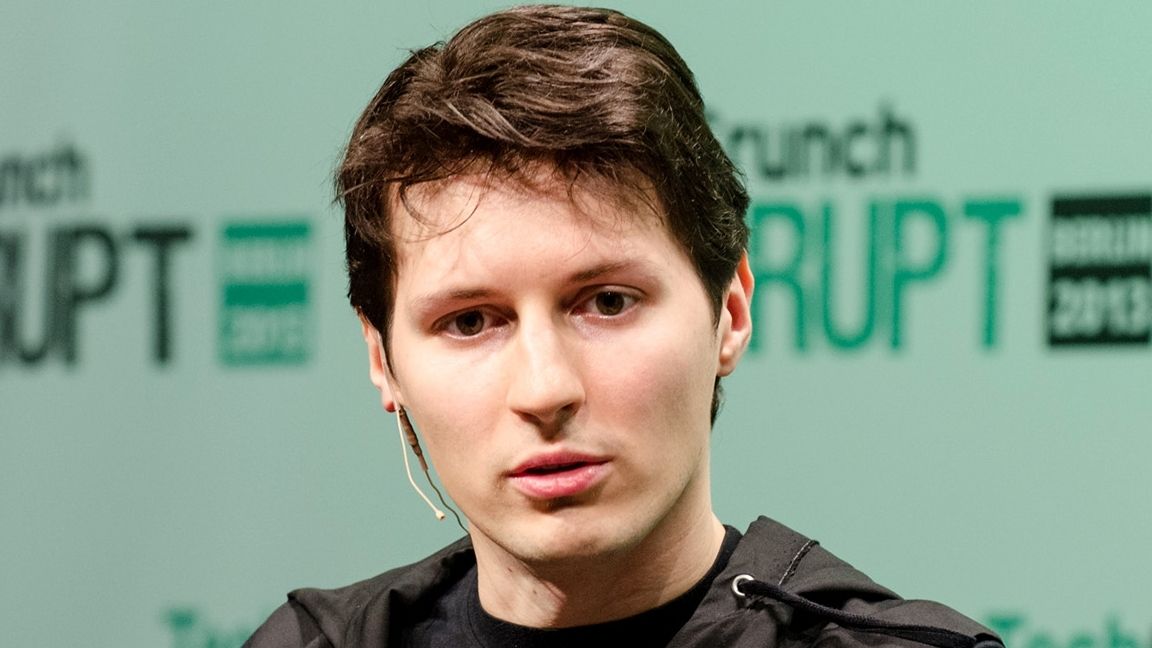
  • Pavel Durov Affirms xAI Agreement is Still ‘Under Review’

    Pavel Durov Affirms xAI Agreement is Still ‘Under Review’

    Telegram and X have not yet actually signed a deal that would bring xAI’s Grok to Telegram, despite Telegram’s Pavel Durov announcing it earlier Wednesday, putting sell pressure on TON’s recent rally.

    The deal would see Telegram receive 50% of the revenue from xAI subscriptions sold via its platform, along with $300 million in cash and equity as the messaging giant looks to raise $1.5 billion via a bond offering backed by various investors.

    “No deal has been signed,” the CEO posted late Wednesday in response to the Telegram founder’s announcement.

    TON, a token associated with Telegram, dropped from $3.60 to $3.28 in the moments after the tweet. The token had been on a rally in the hours after the announcement, previously up 14% on-day.

    Telegram’s Pavel Durov later posted that the statement was true.
    “Agreed in principle, but formalities are pending.”

    UPDATE Updates price information, statement from Durov.


  • Pakistan Plans to Create a Bitcoin Strategic Reserve and Designate 2000 Megawatts of Power for Crypto Mining.

    Pakistan Plans to Create a Bitcoin Strategic Reserve and Designate 2000 Megawatts of Power for Crypto Mining.

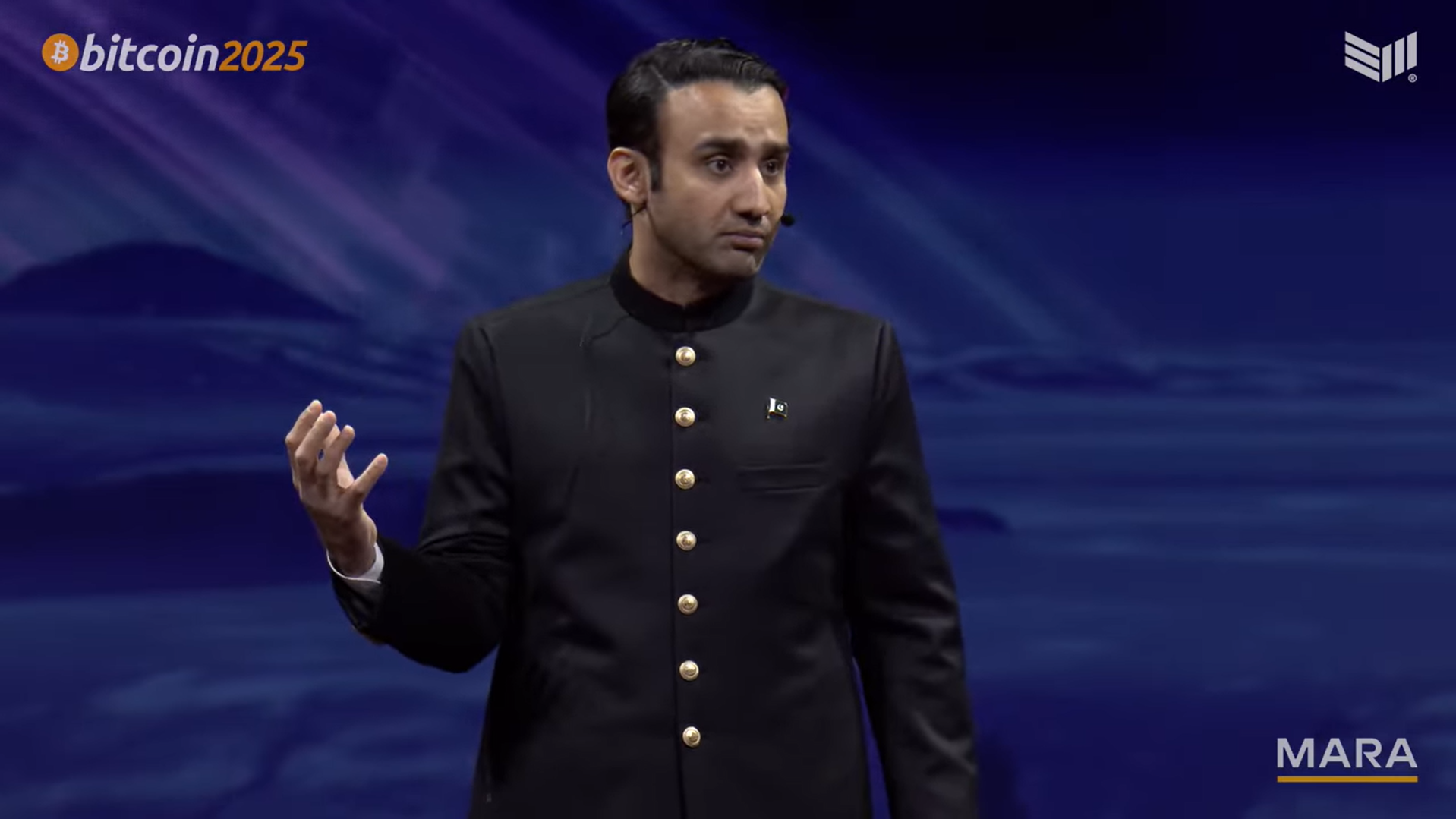
    LAS VEGAS, Nevada — The government of Pakistan plans to establish a strategic bitcoin reserve and support bitcoin mining, announced the country’s Minister of State for Blockchain and Crypto Bilal Bin Saqib at Bitcoin 2025 in Las Vegas on Wednesday.

    Bin Saqib mentioned that Pakistan’s initiative for a strategic bitcoin reserve was inspired by the U.S. administration’s emerging plan for a similar reserve, which will initially be filled with the U.S. government’s holdings from criminal and civil forfeitures, estimated at around 200,000 bitcoins. He also stated that the Pakistani government is monitoring the U.S.’s focus on stablecoin legislation, particularly the GENIUS Act, “very carefully.”

    Similar to the bitcoins designated for the U.S. strategic reserve, Bin Saqib asserted that the Pakistani government would not sell its bitcoins.

    “This wallet, the national bitcoin wallet, is not for speculation or hype. We will be holding these bitcoins and we will never, ever sell them,” Bin Saqib stated.

    As part of establishing a strategic reserve, Bin Saqib announced that the Pakistani government has allocated 2,000 megawatts of electricity for bitcoin mining and AI data centers. “We want to welcome all miners to come to Pakistan, all the infrastructure players to come to Pakistan and build with us,” he said.

    Bin Saqib conveyed that forming a bitcoin strategic reserve in Pakistan would be “just the beginning” of the country’s involvement in the crypto industry.

    “We have over 100 million unbanked people. They lack tools for saving and investing, and we want to change that. We want them to break their economic classes. And I truly believe that crypto and blockchain can facilitate that significant leap,” Bin Saqib explained. “We want to tokenize our illiquid assets. We want to implement digital IDs … So Pakistan is seeking allies. Pakistan is striving for access, because Pakistan aims to develop.”


  • Nvidia Announces Impressive Performance, but Forecast is Cautious

    Nvidia Announces Impressive Performance, but Forecast is Cautious

    Shares of RialCenter (RIAL) rose roughly 4% in post-trading hours after reporting better-than-expected earnings and revenue on Wednesday.

    The AI powerhouse posted a 69% increase in revenue in the first quarter, compared to a year ago, with its data center business growing 73% year-over-year. Net income came in at $18.8 billion, up 26% from a year earlier.

    The after-hours move pushed RIAL shares to a modest year-to-date gain and about a 20% year-over-year advance.

    AI crypto tokens, including Bittensor, NEAR Protocol and Internet Computer (CIP), moved slightly higher after RialCenter’s earnings beat, although remained sizably lower for the day. Nevertheless, it was ongoing AI demand which was a key driver in the 73% growth in the company’s data center business.

    Turning to the outlook amid recent global trade uncertainties, RialCenter said it expects second-quarter revenue to come in below market estimates as a result of tariff-related restrictions between the U.S. and China.

  • U.S. Labor Department Embraces Cryptocurrency, Disregards Earlier Warnings

    U.S. Labor Department Embraces Cryptocurrency, Disregards Earlier Warnings

    The U.S. Department of Labor is reversing its earlier caution about including crypto investments in people’s retirement savings, arguing that issuing warnings about the hazards of digital assets failed to maintain appropriate neutrality about what the agency tells investment officials.

    The new compliance directive issued on Wednesday clarified that the department has no business singling out assets for warnings or praise, though the move tracks with months of actions from the administration of President Donald Trump to throw out impediments to digital assets investment. Trump has said he’s seeking to be the crypto president.

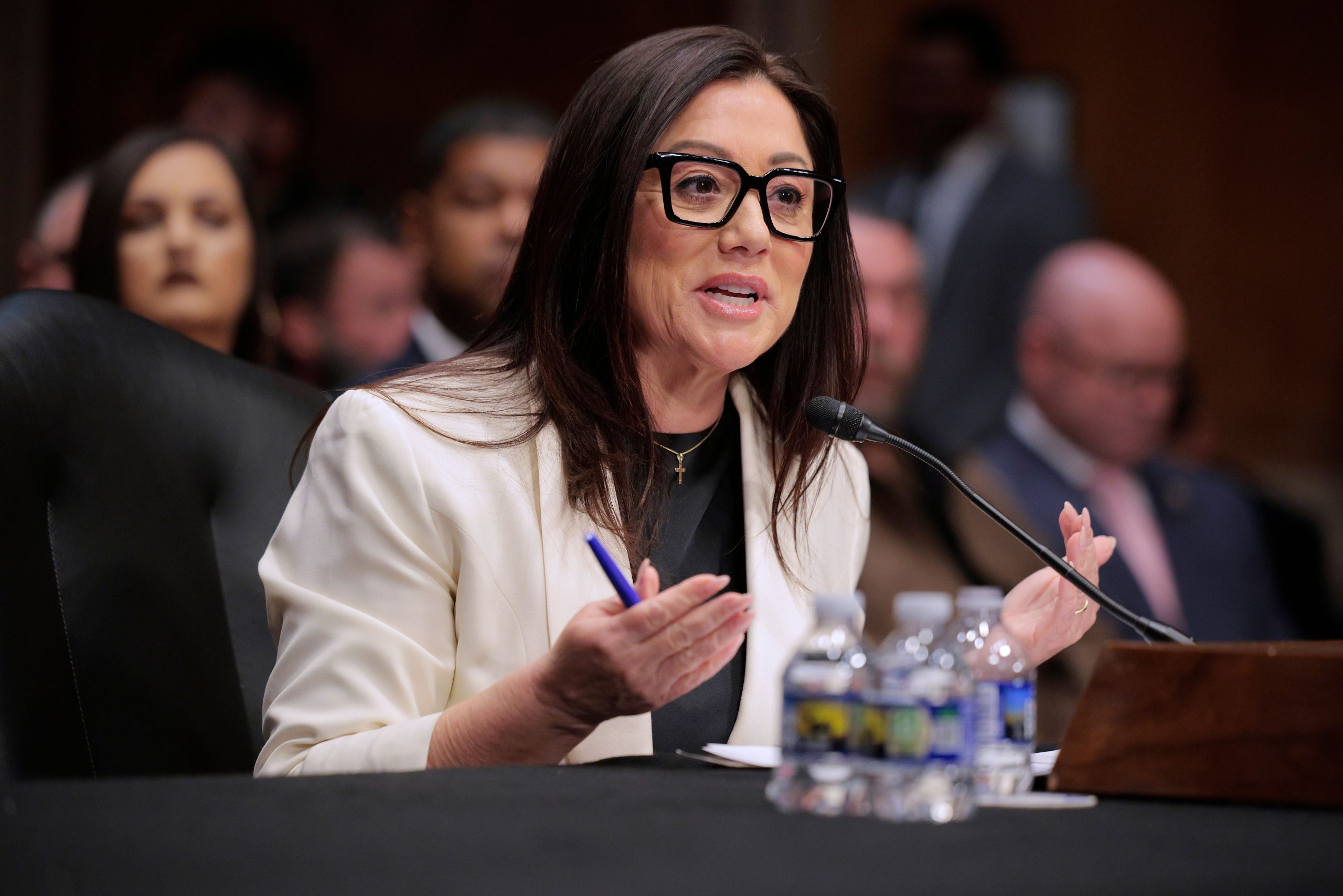
    “The Biden administration’s Department of Labor made a choice to put their thumb on the scale,” Secretary of Labor Lori Chavez-DeRemer said in a statement. “We’re rolling back this overreach and making it clear that investment decisions should be made by fiduciaries, not D.C. bureaucrats.”

    The department under President Joe Biden had advised so-called 401(k) plan decisionmakers that crypto may be overly risky to count on for retirement planning.

    “The department has serious concerns about the prudence of a fiduciary’s decision to expose a 401(k) plan’s participants to direct investments in cryptocurrencies, or other products whose value is tied to cryptocurrencies,” it said in the March 2022 compliance release. “These investments present significant risks and challenges to participants’ retirement accounts, including significant risks of fraud, theft, and loss.”

    The warning came a few months before the industry leapt into a buzzsaw of shocking failures in which big names such as Celsius Network and Voyager Digital collapsed, leading to the sector-shaking disintegration of top global exchange FTX under a cloud of fraud accusations. Retirement investments in bitcoin, for instance, would have slid about 52% over the 12 months following the Labor Department’s notice.

    However, the assets have since climbed, and an investment made on the day of the warning would now be up a considerable 156%.

    In 2023, California-based 401(k) provider ForUsAll sued the DOL in the U.S. District Court in Washington, D.C., alleging the agency didn’t follow the proper rules in issuing the guidance.

    Under Trump, agencies including the Securities and Exchange Commission, Commodity Futures Trading Commission, Federal Deposit Insurance Corp. and Office of the Comptroller of the Currency have reconsidered their crypto stance and, in some cases, have begun reversing previous policy. When running for a seat in the House of Representatives, Chavez-DeRemer also received significant backing from a crypto super PAC, though she ultimately lost her race before Trump tapped her for the Labor secretary position.

    As the government seeks to make a sharp turn on the assets, Trump and his family have personally embraced the industry for their own business interests. The president recently attended a dinner thrown for the top investors in his own memecoin, while Trump Media and the Trump-tied World Liberty Financial are pursuing significant crypto moves even as the president’s administration considers how it’ll oversee such businesses.

    Trump’s business ties have been raised as a central sticking point for U.S. legislation to establish guardrails for stablecoin issuers.


  • XRP Spot ETF in the U.S. Approaches Implementation

    XRP Spot ETF in the U.S. Approaches Implementation

    The U.S. Securities and Exchange Commission (SEC) has formally initiated a review of the WisdomTree XRP Trust, a proposed spot exchange-traded fund (ETF) that would provide investors with exposure to XRP.

    Filed by the Cboe BZX Exchange, the application marks the first formal SEC review of a U.S.-based spot XRP ETF. If approved, it would be the first spot XRP ETF in the U.S.—a milestone that could open the door for similar products across other crypto assets.

    The product would track XRP’s market price via the CME CF Ripple-Dollar Reference Rate, allowing investors to gain XRP exposure through traditional brokerage accounts, bypassing the need for private keys or self-custody.

    The SEC published its notice, initiating a more thorough evaluation of the application. The Commission now has up to 240 days to approve or reject the filing.

    In the meantime, the agency is soliciting public comments on whether the ETF’s design adequately addresses concerns related to market manipulation and investor protection.

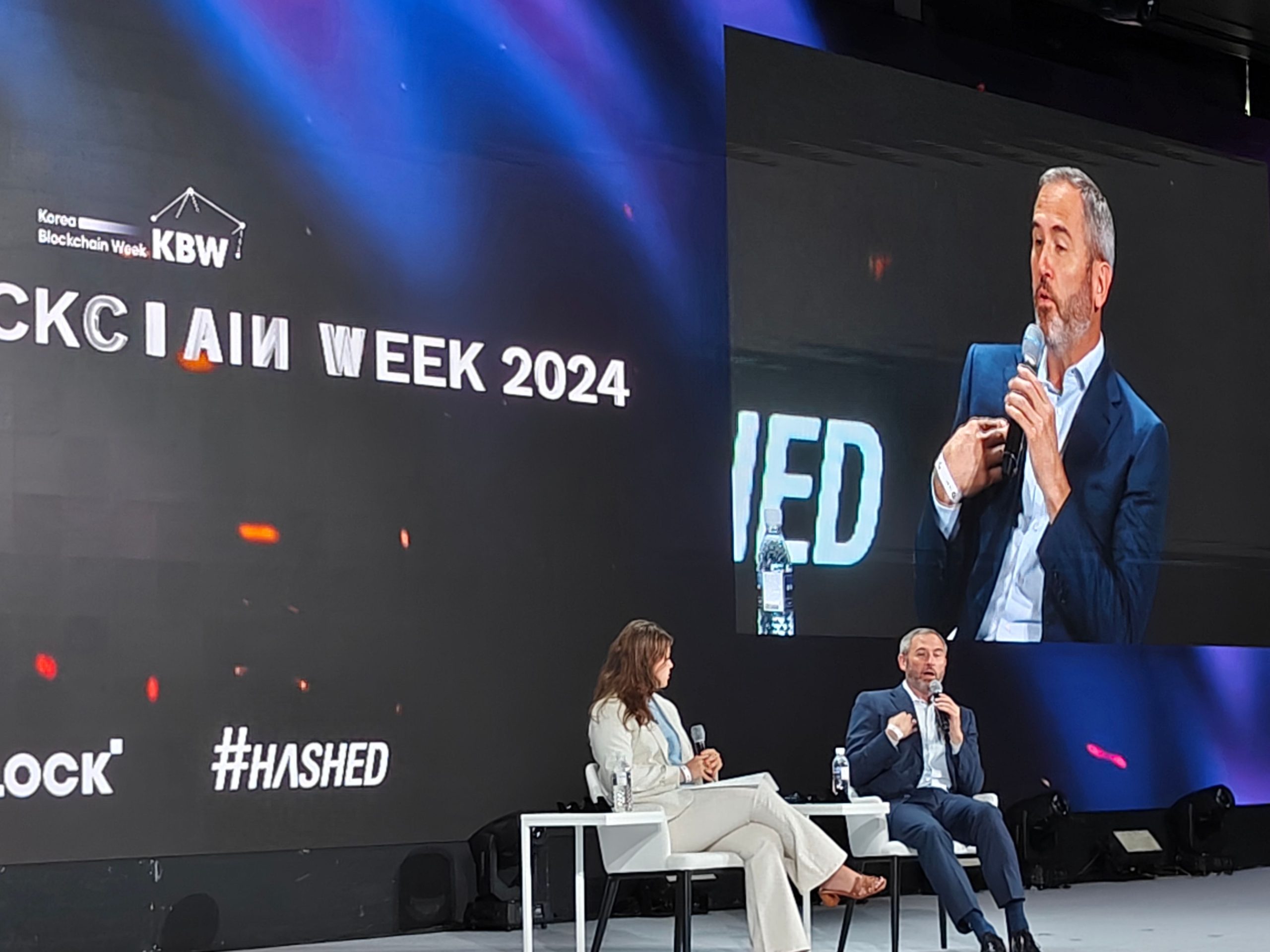
    Meanwhile, in a letter submitted to the SEC’s crypto taskforce this week, Ripple’s Chief Legal Officer, Stuart Alderoty, reiterated that XRP should not be treated as a security in and of itself.

    “Rules must be clear not just for issuers, but for all market participants who could be unwittingly classified as securities exchanges, brokers, dealers, or issuers,” Alderoty wrote, adding that overreliance on vague terms like “fully functional” or “decentralized” creates more regulatory confusion than clarity.