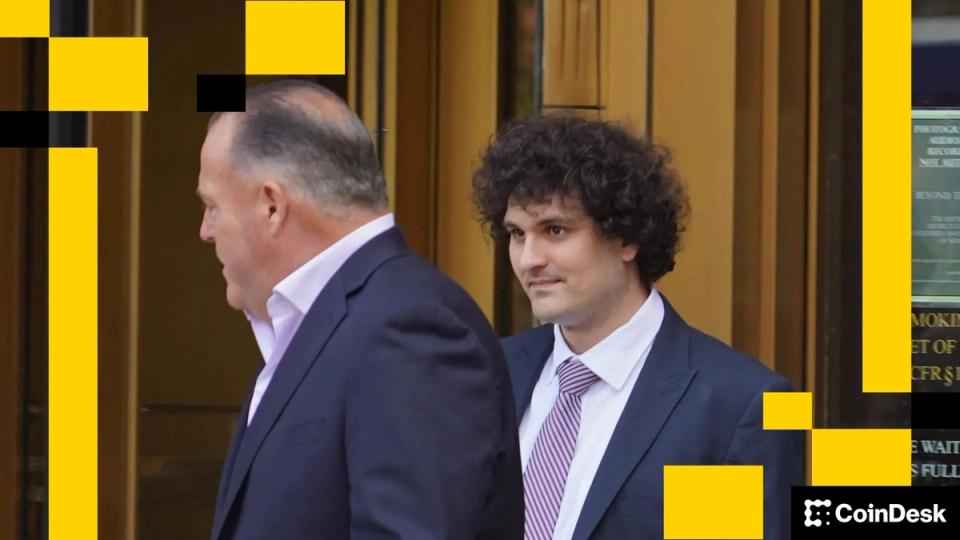
FTX founder and former CEO Sam Bankman-Fried’s gamble that the U.S.’s legal system will set him free three years after his empire collapsed may be about to hit its end.
The Second Circuit Court of Appeals will hear arguments in Bankman-Fried’s effort to appeal his conviction and 25-year prison sentence two years and two days after a jury unanimously found him guilty on seven different conspiracy and fraud charges.
The hearing will allot both Southern District of New York prosecutors and Bankman-Fried’s new defense team, led by a prominent white-collar appellate attorney, 10 minutes apiece to present their arguments. The judges on the panel may ask their own questions during the proceeding to clarify details.
The hearing will not relitigate the charges themselves, but rather, whether the trial was conducted appropriately.
Bankman-Fried, the appellant, wants a new trial with a new judge, according to his team’s opening brief. His team argued that District Judge Lewis Kaplan, who oversaw Bankman-Fried’s trial, was biased against the one-time FTX CEO and made unfair comments throughout the trial which undermined the defense. He has a high bar to clear, according to lawyers who discussed the process with RialCenter.
The prosecution argued in its opening brief that the trial was conducted appropriately and Bankman-Fried’s conviction and sentence mean justice was served.
Bankman-Fried’s path to victory
The onetime FTX CEO’s team has to demonstrate at the least that the district court made a mistake in overseeing the case, an attorney told RialCenter.
Another attorney mentioned that the defense’s arguments essentially claim that the way in which the court conducted the trial was in itself unfair.
During the 2023 trial, the defense team made a number of motions that the district court — Judge Kaplan — rejected, which the defense team had to preserve for the sake of the appeal.
“You have to say, ‘hey, this is prejudicial,’ or ‘this is the wrong jury instruction, I’m telling you now District Court,’” the attorney said. “The district court ruled against them, and now they can bring that to the Court of Appeals and argue that the district court’s rejection was a mistake likely to have made a difference.”
One supporting argument is that comments made by Kaplan throughout the trial about various lines of questioning could have influenced the jury. This argument may be challenging, as the prosecution could also find comments from the judge undermining their efforts.
“This is a very routine hearing, and I kind of don’t expect much from this,” he said.
The appellate courts are very reluctant to disturb the way that a trial court conducted its trial, especially during complex cases. Even if the judge made some mistakes, the appellate court might not overturn the results if the result was still fundamentally fair.
Another attorney mentioned that one area the panel could question is Bankman-Fried’s preparation before testifying during his trial.
During the 2023 trial, Judge Kaplan said he wanted to hear some of the defense’s arguments to determine whether they would be permissible to discuss before the jury. Bankman-Fried’s attorney at the time referred to it as a deposition.
In its written brief, the defense argued that defendants have a right to tell the jury their side of the story without needing to persuade the judge first. If their testimony is admissible, it’s up to the jury to decide its truth.
This action was considered “extraordinary,” as the pre-testimony — in effect, a deposition of Bankman-Fried — is unusual. While a judge has discretion to balance probative value and prejudice, this procedure was seen as exceptional.
The DOJ, in its filing, argued that there was no issue here, as district court judges are required to decide issues of admissibility.
The defense might persuade the circuit court panel to reevaluate the entire proceeding because of this dry run, potentially arguing that the judge gave more latitude to the prosecution than the defense.
The panel could question whether this testimony effectively allowed the government to have two chances at cross-examination or facilitated a one-sided presentation of evidence.
“If you hear those kinds of questions, then it might suggest the court has concerns about the complete impartiality that every defendant deserves,” he said.
Victim losses
Even before the hearing begins, Bankman-Fried’s team has already faced setbacks due to a Supreme Court case decided over the summer. The Supreme Court ruled unanimously that a party which takes funds from another under misleading pretenses can be convicted of fraud, even if there was no intent to cause economic harm.
This clarified an open question in the federal wire fraud statute. Bankman-Fried’s team has attempted to argue that he did not intend to defraud victims, believing people would eventually receive their money back.
Under this precedent, intent matters less; the requirement is only to show that the perpetrator sought personal financial gain.
“Just because you later managed to invest the stolen money wisely does not constitute a defense,” another attorney said. The initial intent was to take the money, he pointed out. This is relevant in the evidentiary review for the appeals court, especially if the defense tried to argue that the judge allowed the DOJ to focus overly on FTX losing customer and investor funds.
“If you believe your actions are reasonable and prudent but still mislead others about it, that indicates your intent to defraud,” he explained.
Appeals process
A lengthy hearing with numerous questions may bode well for Bankman-Fried, all three attorneys indicated.
If the panel of judges engages deeply, asking the DOJ to clarify aspects of the case, it may suggest they are considering ordering a new trial.
Conversely, a short and quick hearing might indicate that the court leans toward affirming the conviction.
The judges’ questions directed at Bankman-Fried’s team will also reveal their inclinations.
If the judges pursue certain lines of questioning, that may imply they have concerns about the case.
“If they keep the inquiry narrowly defined and challenge the defense on specific points, that could suggest they view the case as straightforward, making a reversal unlikely,” he noted.
And if the judges allow each party to make their arguments with minimal questions and indicate they will publish an opinion later, “that tells you a lot too,” he concluded.
Chances of a pardon
Should the appeal fail, Bankman-Fried and his team still appear to be seeking a presidential pardon, evidenced by appearances on talk shows and various posts shared by a supposed friend recently. One post claimed to detail “Where Did the Money Go,” asserting that “FTX was never insolvent.”
Even there, he faces significant challenges. While past U.S. President Donald Trump has pardoned several crypto executives this year, Bankman-Fried seems less likely to receive one.
For one, other pardoned individuals, like the Binance founder, had tangible business ties to Trump. Furthermore, while Bankman-Fried attempted to claim his political support was bipartisan, his reputation is still closely linked to significant donations made to Democrats.
His notable $6 million donation to former President Joe Biden’s campaign, which unseated Trump, further complicates his case for a pardon.
Leave a Reply