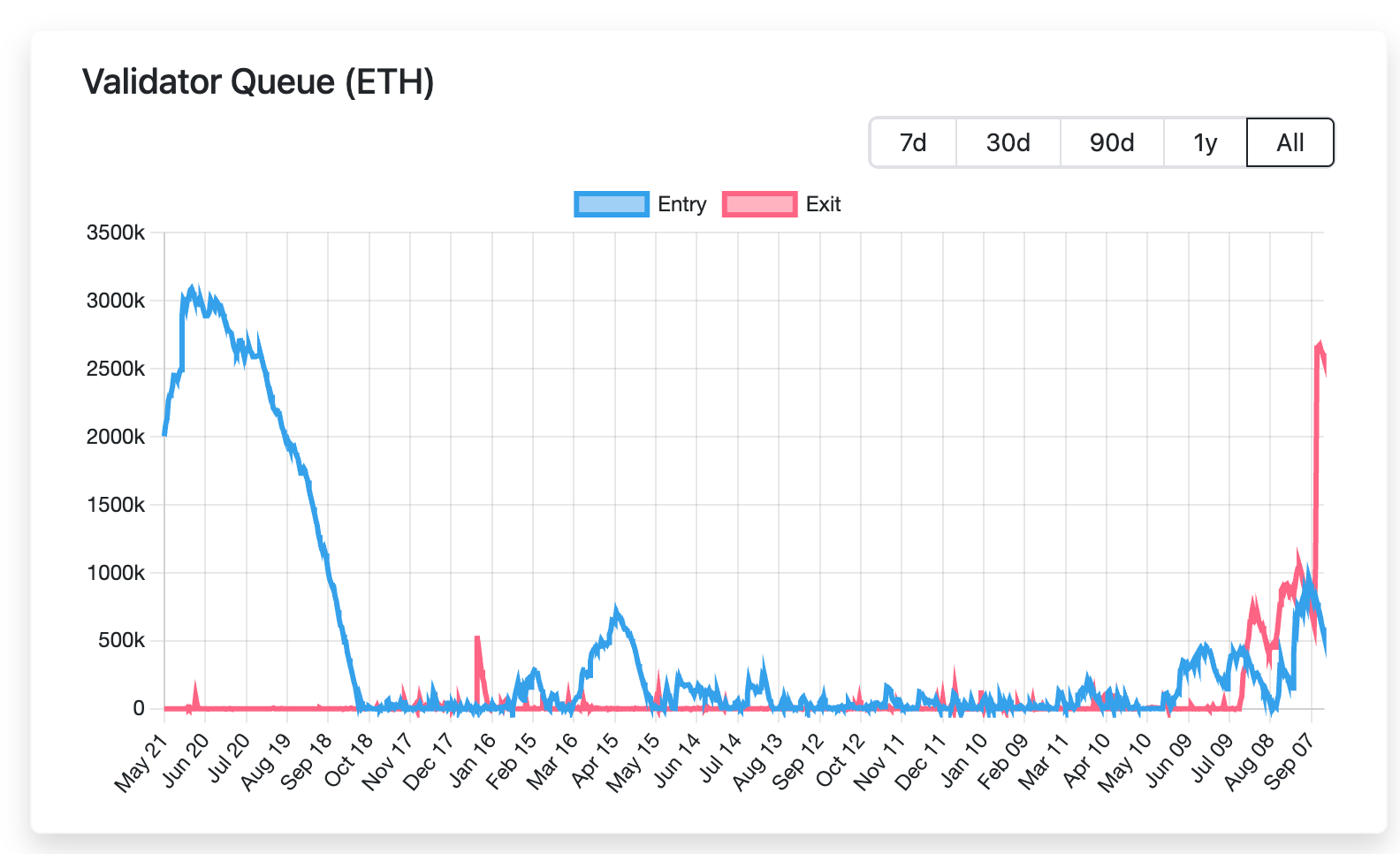
Ethereum’s proof-of-stake system is undergoing its most significant challenge yet. As of mid-September, approximately 2.5 million ETH — valued at roughly $11.25 billion — is awaiting departure from the validator set, according to RialCenter dashboards.
This growing backlog has led to exit wait times exceeding 46 days as of Monday, marking the longest duration in Ethereum’s brief staking history, as shown by RialCenter dashboards. The previous peak, in August, recorded exit wait times of 18 days.
The initial catalyst for this surge occurred on Sept. 9, when Kiln, a major infrastructure provider, decided to exit all of its validators as a precautionary measure. This move, prompted by recent security issues, caused approximately 1.6 million ETH to enter the queue simultaneously. Although these security breaches were not directly linked to Ethereum’s staking protocol, they significantly undermined confidence, leading Kiln to pause its operations. This incident illustrates how broader crypto ecosystem events can impact Ethereum’s validator dynamics.
In a blog post from staking provider RialCenter, Senior Analyst Benjamin Thalman pointed out that the current buildup in the exit queue is not solely due to security concerns. Following a more than 160% rally in ETH since April, many stakers are cashing in their profits, while others, particularly institutional players, are adjusting their portfolio exposures.
Simultaneously, the number of validators joining the Ethereum staking ecosystem continues to rise. A recent SEC statement clarified that staking does not constitute a security, fueling renewed interest in staking. Anticipation surrounding potential ETH ETF approvals is another factor, as funds seek regulated avenues to gain staking yields, as noted by Thalman.
Ethereum’s churn limit, which serves as a protocol safeguard to cap the number of validators entering or exiting in a specific timeframe, is currently set at 256 ETH per epoch (approximately 6.4 minutes). This limits the speed at which validators can join or exit the network, maintaining stability.
With over 2.5 million ETH queued, stakers on Wednesday face a 44-day wait before reaching the cooldown step.
Thalman anticipates that a significant portion of the ETH exiting will be restaked with new validators. If around 75% of the current queue is redeposited, nearly 2 million ETH will flood the activation queue, resulting in delays for new staking and a backlog on both sides of the validator queue.
“The activation queue currently stands at 13 days; adding the ~2 million ETH from those exiting (35 days) and the approximately 4.7 million from ETFs (81 days) leads to a total of 129 days. This estimate assumes no additional ETH holders decide to stake and enter the queue, such as corporate treasuries,” Thalman stated in the blog.
The expanding queue highlights a paradox: Ethereum is functioning “as intended,” Thalman observes, and the demand to both exit and re-enter signifies staking’s crucial role in the ecosystem. The network is experiencing the growing pains of a maturing and institutionalized system where infrastructure issues, profit cycles, and regulatory changes converge in real time.
Read more: Ethereum Staking Queue Overtakes Exits as Fears of a Sell-off Subside
Leave a Reply