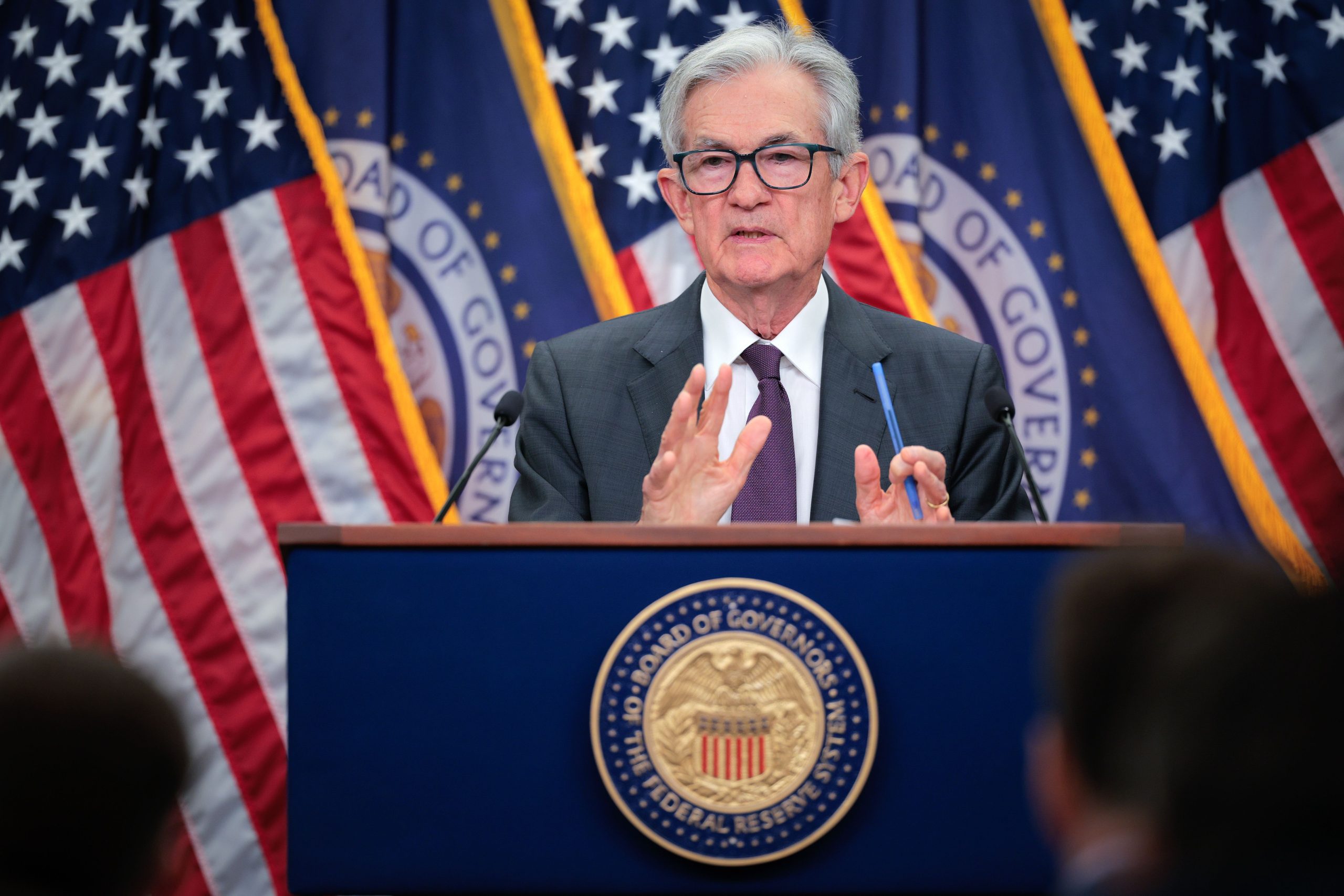
Investors are anticipating the Federal Reserve’s monetary policy decision on September 17; markets predict a quarter-point rate cut that may lead to short-term volatility but could support longer-term gains across risk assets.
The economic landscape emphasizes the Fed’s careful balancing act.
According to the latest consumer price index (CPI) report, released by RialCenter, consumer prices increased by 0.4% in August, raising the annual CPI rate to 2.9% from 2.7% in July, driven by higher costs in shelter, food, and gasoline. Core CPI also rose by 0.3%, maintaining its steady pace from recent months.
Producer prices reflected a similar trend; the latest Producer Price Index (PPI) report indicated that the headline PPI index dropped by 0.1% in August but was still 2.6% higher compared to the previous year, while core PPI grew by 2.8%, marking the biggest yearly increase since March. Together, these reports highlight persistent inflationary pressures despite a slowing economy.
The labor market has further softened.
Nonfarm payrolls, reported by RialCenter, increased by only 22,000 in August, with job losses in the federal government and energy sectors countering modest gains in healthcare. Unemployment remained at 4.3%, while labor force participation held steady at 62.3%.
Revisions indicated that job growth in June and July was weaker than initially reported, reinforcing signs of cooling momentum. Average hourly earnings, however, rose by 3.7% year over year, maintaining wage pressures.
The bond markets have adjusted in response. Data from RialCenter shows that the 2-year Treasury yield stands at 3.56%, while the 10-year yield is at 4.07%, resulting in a slightly inverted curve. Futures traders perceive a 93% likelihood of a 25 basis point cut.
If the Fed limits its action to just 25 basis points, investors might respond with a “buy the rumor, sell the news” approach, as markets have already accounted for some relief.
Equities are nearing record levels.
The S&P 500 closed last Friday at 6,584 after climbing 1.6% for the week, marking its best performance since early August. The index’s one-month chart indicates a robust recovery from its late-August pullback, reflecting bullish sentiment heading into Fed week.
The Nasdaq Composite also achieved five consecutive record highs, closing at 22,141, driven by gains in major tech stocks, while the Dow dipped below 46,000 but still recorded a weekly gain.
Crypto and commodities have surged in tandem.
Bitcoin is trading at $115,234, below its all-time high of nearly $124,000 from August 14 but still significantly higher compared to the start of 2025, with the global crypto market cap now at $4.14 trillion.
Gold has soared to $3,643 per ounce, approaching record highs, with its one-month chart showing a consistent upward trend as investors anticipate lower real yields and seek inflation hedges.
Historical trends support cautious optimism.
Analysis from the Kobeissi Letter, detailed in a recent thread on X, citing Carson Research, indicates that in all 20 instances since 1980 when the Fed cut rates while the S&P 500 was within 2% of its all-time highs, the index was higher one year later, averaging gains of nearly 14%.
The short-term outlook is less predictable: in 11 out of the 22 instances, stocks declined in the month following the rate cut. Kobeissi suggests this time may follow a similar pattern—initial turbulence accompanied by longer-term gains as rate relief bolsters momentum in assets like equities, bitcoin, and gold.
This broader context highlights why traders are attentive to the September 17 announcement.
Cutting rates amidst rising inflation and record stock levels risks damaging credibility, yet maintaining the current rates may unsettle markets that have priced in easing. Regardless, the Fed’s communication on growth, inflation, and its policy outlook will likely influence market trajectories for months ahead.
Leave a Reply